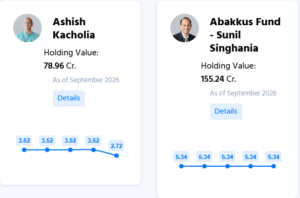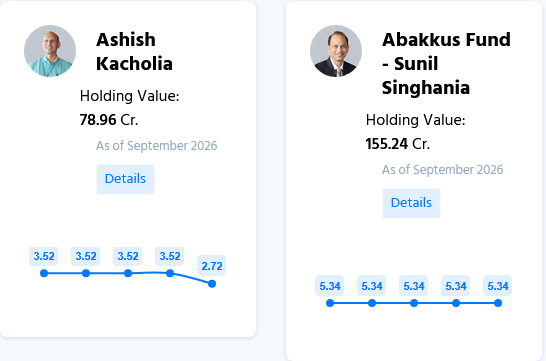
Meanwhile, Sunil Singhania’s Abakkus continues to hold a 5.34% stake, according to the shareholding figures cited here.
The divergence between an encouraging brokerage outlook and a prominent investor’s reduced exposure makes Carysil an interesting stock to examine. The company’s growth ambitions are substantial, but the real question is whether its capacity expansion, revenue targets and profitability can translate into sustainable shareholder returns.
A global kitchen solutions player with an ambitious growth plan
Carysil has built an international presence in premium kitchen solutions, specialising in quartz and stainless-steel sinks, faucets, countertops and built-in kitchen appliances. Headquartered in India, the company operates through subsidiaries in the UK, Germany and the UAE, with its products reaching more than 58 countries.
According to ICICI Direct’s research report, Carysil generated revenue of approximately ₹924 crore in FY26. Against this base, the company is expanding manufacturing capacity across several product categories to capture a larger share of the global and domestic markets.
The brokerage believes the company is entering a phase in which capacity additions, a broader product portfolio and deeper distribution can drive sustained growth.
The $282 billion opportunity: How much can Carysil capture?
One of the most compelling aspects of the investment thesis is the size of the addressable market.
ICICI Direct estimates that the combined global market for kitchen sinks, appliances, faucets and countertops will reach approximately $282 billion in 2026. Compared with Carysil’s annual revenue of around ₹924 crore, this suggests that the company operates in a market with substantial room for expansion.
However, the size of the total addressable market should not be confused with the revenue Carysil can realistically capture. The company competes with established international brands and manufacturers, and its growth will depend on product quality, pricing, distribution, customer relationships and its ability to execute capacity expansion profitably.
Nevertheless, the opportunity is meaningful. Carysil can pursue growth not only by selling more sinks but also by increasing its presence in faucets and kitchen appliances. A broader product portfolio could allow it to serve more of a customer’s kitchen requirements while improving its share of spending per customer.
This shift from being predominantly a sink manufacturer to a more comprehensive kitchen solutions provider could become an important driver of its next growth phase.
Capacity expansion could unlock the next leg of growth
Carysil is increasing manufacturing capacity across its major product segments. According to ICICI Direct, the planned expansion includes:
- Quartz sinks: Capacity is expected to increase by 25% to 12.5 lakh units by Q4FY27.
- Stainless-steel sinks: Capacity is expected to rise from 1.8 lakh units in FY26 to 4 lakh units in FY28, an increase of approximately 122%.
- Kitchen appliances and faucets: Capacity is planned to double by FY28.
These investments are intended to help Carysil accommodate higher demand in international markets while strengthening its domestic business.
ICICI Direct expects the company’s revenue to grow at a compound annual growth rate (CAGR) of 16.3% between FY26 and FY28. That would represent a significant increase in scale over a relatively short period.
The key consideration, however, is utilisation. New manufacturing capacity creates value when demand grows sufficiently to absorb the additional output. If demand disappoints or utilisation ramps up more slowly than expected, depreciation, operating costs and capital employed could weigh on returns.
Consequently, investors should track not only capacity additions but also order growth, utilisation levels, margins and return on capital.
Can Carysil triple its domestic revenue in five years?
Perhaps the most ambitious part of Carysil’s strategy is its domestic growth target.
The company is targeting annual Indian revenue of approximately ₹500 crore within five years, compared with ₹176 crore in FY26. This represents a CAGR of approximately 23.3%.
India accounted for roughly 19% of Carysil’s FY26 revenue, according to the brokerage report. Achieving the target would materially increase the contribution of the domestic business and diversify the company’s revenue base.
Carysil has already expanded its distribution network significantly. Its dealer count reportedly increased from around 1,500 in FY22 to more than 4,500 in FY26.
The company has also entered the kitchen appliances and faucets segments, enabling it to offer a wider range of products through its distribution network.
This strategy could support growth in several ways. A larger dealer network can improve geographic reach, increase product visibility and strengthen access to customers. A wider portfolio can also help the company generate more revenue from existing dealers rather than relying exclusively on sink sales.
However, domestic growth will depend on sustained execution. Dealer additions need to translate into productive outlets and repeat sales, while the company must compete effectively against established brands in the Indian market.
If Carysil can execute this strategy, the domestic business could become a more meaningful growth engine over the next five years.
Stable margins and earnings growth: The next test
Revenue growth alone does not determine the quality of an investment. Profitability and capital efficiency matter just as much, particularly for a company undertaking substantial capital expenditure.
ICICI Direct expects Carysil to maintain operating margins in the range of 19.7% to 20%. The brokerage anticipates that some of the benefits from operating leverage will be reinvested in expanding the domestic business.
On these assumptions, it expects earnings to grow by approximately 21%, with return on capital employed (RoCE) projected to increase to 18.5% in FY27 from 16.65% in FY26. Return on equity (RoE) is expected to improve to 16.8% from 16%.
The projected combination of double-digit revenue growth, stable margins and improving capital efficiency underpins the brokerage’s positive outlook.
Still, these are forecasts rather than guaranteed outcomes. Investors should monitor whether earnings growth keeps pace with revenue growth and whether incremental capital expenditure generates adequate returns. Rising debt, weaker utilisation or margin pressure could change the investment equation.
Why is Ashish Kacholia reducing his stake?
The other side of Carysil’s story is its shareholding pattern.
The figures cited indicate that Ashish Kacholia has reduced his holding from 3.52% to 2.72%. This is a reduction of 0.80 percentage points, or approximately 22.7% of his previous stake on a relative basis.
At the same time, Sunil Singhania’s Abakkus reportedly continues to hold 5.34%.
Kacholia’s reduction is worth monitoring, particularly because investors often track the portfolios of well-known market participants for potential clues about their views on individual companies.
However, a reduction in an investor’s holding does not, by itself, establish a loss of confidence in the company. Portfolio rebalancing, liquidity requirements, risk management or a change in allocation can also explain a sale. Without a direct statement from the investor, the reason for the reduction remains unknown.
Similarly, Abakkus continuing to hold its stake is not proof that the stock is attractively valued at current prices.
The more useful approach is to treat these shareholding movements as additional information rather than as a substitute for fundamental analysis. The company’s financial performance, cash generation, capital allocation and valuation should ultimately carry greater weight.
Is ₹1,400 a realistic target?
ICICI Direct has initiated coverage on Carysil with a BUY rating and a target price of ₹1,400, based on 27 times its estimated FY28 earnings per share (EPS).
This valuation framework implies that the brokerage expects Carysil’s earnings to expand sufficiently to support the assigned multiple.
The target price is therefore linked to two key assumptions: the company must deliver the projected earnings growth, and the market must be willing to value those earnings at the assumed multiple.
If capacity expansion translates into stronger revenue, margins remain stable and domestic growth accelerates, the brokerage’s thesis could play out. Conversely, execution delays, slower demand, weaker profitability or valuation compression could limit returns even if the company continues to grow.
The target price should consequently be viewed as a research estimate based on assumptions, not a guaranteed future market price.
Investors should also compare the target price with the prevailing market price before assessing potential upside. A bullish business outlook does not automatically mean that the stock offers an attractive entry valuation.
Key risks investors should watch
Despite the growth opportunity, several factors deserve attention:
- Execution risk: The company must complete its planned capacity expansion on time and ramp up utilisation efficiently.
- Demand risk: A large global market does not guarantee that Carysil will capture a meaningful share of it.
- Margin pressure: Competition, input costs and the expense of expanding the distribution network could affect profitability.
- Capital efficiency: New capacity requires investment, and the resulting returns must justify the capital employed.
- Valuation risk: Even strong business performance may not translate into attractive stock returns if expectations are already reflected in the market price.
- Shareholding changes: Further reductions by major shareholders may warrant attention, although individual transactions should not be interpreted in isolation.
The bottom line: A compelling growth story that still needs execution
Carysil presents an interesting combination of a large addressable market, international reach, expanding manufacturing capacity and ambitious domestic growth targets. ICICI Direct’s projections suggest that the company could sustain healthy revenue and earnings growth over the coming years, with kitchen appliances and faucets offering additional avenues for expansion.
The ₹1,400 target price reflects this optimism, with the brokerage valuing the company at 27 times estimated FY28 EPS.
Yet the investment case is not without uncertainty. The company must convert capacity expansion into profitable sales, build a stronger domestic franchise and maintain healthy capital returns. Meanwhile, Ashish Kacholia’s reduced holding is a development worth monitoring, but it should not automatically be interpreted as a verdict on Carysil’s prospects.
For investors, the central question is not simply whether Carysil operates in a $282 billion market. It is whether the company can capture a growing share of that market while generating attractive returns on the capital it invests.
Carysil’s opportunity looks substantial on paper. The next phase will be about execution, earnings delivery and valuation discipline.
Editorial note: The article is based on the ICICI Direct report and shareholding figures provided. Before publication, verify the latest shareholding disclosures, the date of Kacholia’s reduction, Carysil’s current market price and the brokerage report’s publication date. The $282 billion figure refers to the combined addressable market cited by ICICI Direct, not Carysil’s own revenue opportunity.
Click here to download the ICICI Direct research report on Carysil