Fusion CX IPO opens on October 14 with a ₹702 crore issue; improving profitability and AI ambitions offer growth potential, but customer concentration, acquisition-led expansion and cautious market sentiment remain key concerns.
Fusion CX Limited, a customer experience management services provider backed by prominent market investors, is set to launch its ₹702 crore initial public offering (IPO) on October 14. Despite the participation of ace investors Ashish Kacholia and Mukul Agrawal-backed Sanshi Fund, along with Kotak Mahindra Life Insurance, the IPO has yet to generate strong enthusiasm among market participants.
The grey market premium (GMP) is reportedly hovering between 3.5% and 6.5%, indicating relatively muted listing expectations. While the company’s improving financial performance and expanding artificial intelligence (AI) capabilities provide reasons for optimism, concerns surrounding valuation, customer concentration, overseas dependence and the sustainability of acquisition-driven growth warrant careful consideration.
Pre-IPO Investment Adds Visibility, but Does Not Guarantee Listing Gains
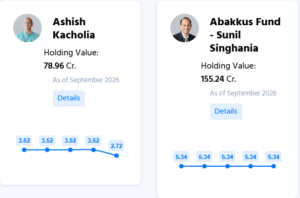
Ahead of the IPO, Sanshi Fund, associated with investor Mukul Agrawal, ace investor Ashish Kacholia and Kotak Mahindra Life Insurance acquired a combined 3.19% stake in Fusion CX, reportedly valued at ₹120 crore.
The participation of established investors could lend credibility to the company’s business prospects. However, pre-IPO investments should not be interpreted as an assurance of strong listing gains or superior long-term returns. Investors must independently evaluate the company’s financial performance, business risks and IPO valuation before making an investment decision.
With the grey market indicating a relatively modest premium, market participants appear cautious about the issue’s near-term listing potential. GMP is an unofficial indicator of investor sentiment, can fluctuate significantly and should not be treated as a reliable predictor of the eventual listing price.
What Does Fusion CX Do?
Incorporated in 2004 and headquartered in Kolkata, Fusion CX provides customer experience (CX) management and business process outsourcing services to enterprises. Its offerings include voice, chat, email, social media and messaging support, alongside emerging AI-related data infrastructure services.
The company’s business model operates primarily in the business-to-business (B2B) segment, helping corporate clients manage customer acquisition, retention, service, technical support, order fulfilment, payments and collections, among other functions.
Fusion CX operates 40 delivery centres across 13 countries and supports customers in 28 languages. Its workforce includes approximately 13,700 customer experience employees and 3,800 field staff. The company also counts 22 Fortune 1000 companies among its clients.
Its geographical footprint enables round-the-clock customer support through onshore centres in the US and Canada, nearshore locations in Latin America, Morocco and Belize, and offshore operations in India and the Philippines.
However, the company remains heavily exposed to international markets. Approximately 90% of its FY26 revenue came from outside India, with the US contributing around 74% of total revenue. This provides access to a large enterprise market but also exposes Fusion CX to overseas economic conditions, client spending decisions and currency-related risks.
Financial Performance Shows a Significant Improvement
According to the financial information outlined in ICICI Direct’s research report, Fusion CX has recorded strong growth in revenue, operating profitability and net profit over FY24–FY26.
The company’s revenue increased 36.8% year-on-year to ₹1,818 crore in FY26. More importantly, EBITDA margin, excluding other income, improved from 7.5% in FY24 to 16.3% in FY26, suggesting better operating leverage and improved profitability.
Net profit rose to ₹170 crore in FY26 from ₹36 crore in FY24.
The research report also highlights approximate FY24–FY26 compound annual growth rates (CAGRs) of 35.4% for revenue, 99.5% for EBITDA and 116% for profit after tax. Return on net worth improved from 13.4% to 30.3% during the same period.
These figures indicate a substantial improvement in the company’s financial profile. Nevertheless, the growth rates should be viewed in context: the profit base in FY24 was relatively low, and acquisitions have played an important role in expanding the business. Investors should therefore assess how much of the improvement reflects sustainable organic growth rather than acquisitions, integration benefits and a low starting base.
Telecom and Utilities Remain the Core Business
Fusion CX serves customers across multiple industries, including telecommunications, utilities, high technology, travel, banking and financial services, healthcare and retail.
Telecom and utilities accounted for 47.3% of FY26 revenue, compared with 30.9% in FY24. Meanwhile, high-tech and travel, banking and financial services, healthcare, and retail each contributed approximately 12–14% of revenue.
The expansion of non-telecom verticals provides some diversification. However, the increasing contribution from telecom and utilities also means that the company’s performance remains closely linked to spending patterns in these sectors.
The report identifies customers such as DMEC Capital Services, Telaid, Ajio, Meesho, Arvind Fashion and Traya among its key customers.
Customer concentration remains a significant risk. The top five and top ten customers accounted for approximately 39% and 49% of FY26 revenue, respectively. The loss of a major customer, a reduction in contract volumes or adverse pricing renegotiations could therefore affect revenue and profitability.
Acquisition-Led Expansion Has Helped Build Scale
Acquisitions have been a central component of Fusion CX’s growth strategy. The company has completed 16 acquisitions since 2007, including six since 2024.
Recent acquisitions include S4 Communications, Ready Call Center, Sequential Technology, Scribe.ology, Skycom and VA Platinum. These transactions have helped expand its presence in telecommunications, utilities and healthcare while strengthening nearshore delivery capabilities.
The strategy allows Fusion CX to enter new markets, acquire customer relationships and expand its service offerings more quickly than it might through organic expansion alone.
However, acquisitions also introduce integration challenges, potential operational inefficiencies and risks associated with the purchase price paid for acquired businesses. Sustaining high growth will depend on the company’s ability to integrate acquisitions effectively and convert the expanded revenue base into consistent cash flows and shareholder returns.
AI Could Offer a New Growth Opportunity
Fusion CX is also seeking to strengthen its technology capabilities through its subsidiary, Omind, which is developing proprietary AI platforms, including Arya, MindVoice and Mind WorkPlace.
These initiatives target areas such as conversational AI, quality assurance automation and workforce management. The company has also expanded into AI-related data infrastructure services, including data annotation and robot teleoperation.
The proposed IPO includes ₹61 crore allocated towards upgrading AI initiatives through Omind. These investments could help Fusion CX improve operational efficiency, develop differentiated services and participate in the growing demand for AI-enabled customer experience solutions.
However, the commercial opportunity remains at an early stage relative to the company’s core operations. Digital solutions accounted for approximately 4.5% of revenue, according to the research report.
Another consideration is that AI automation can have a two-sided impact on the business. Although it may improve productivity and enable higher-value services, it can also reduce demand for traditional voice-based customer support, potentially affecting volumes in the company’s established business.
The long-term success of the AI strategy will depend on customer adoption, the ability to monetise new platforms and whether technology-driven efficiencies translate into sustainable improvements in margins.
Debt Reduction and Cash Generation Are Positives
Fusion CX generated operating cash flow of ₹264 crore in FY26. Its receivable days also declined from 94 in FY24 to 76 in FY26, indicating an improvement in working capital efficiency.
The company plans to use approximately ₹275 crore, or around 55% of the fresh issue proceeds, to repay borrowings. Reducing debt could lower interest expenses and provide greater financial flexibility for future investments.
Finance costs stood at ₹45 crore in FY26, making debt repayment a potentially meaningful contributor to future profitability.
Nevertheless, investors should distinguish between proceeds from the fresh issue and any offer-for-sale component when evaluating how much capital will actually flow into the business and be available for debt reduction.
Key Risks Investors Should Consider
Despite the improvement in financial performance, Fusion CX faces several risks that could influence its future growth and profitability.
- Customer concentration: Nearly half of FY26 revenue came from the top ten customers, making the company vulnerable to contract losses and pricing pressure.
- Dependence on the US market: With approximately 74% of FY26 revenue originating from the US, changes in enterprise spending, client budgets or market conditions could materially affect performance.
- AI-led automation: The adoption of AI may reduce traditional customer support volumes, requiring the company to adapt its service portfolio and business model.
- Acquisition integration: Continued expansion through acquisitions increases the complexity of integrating operations, employees, technology platforms and customer relationships.
- Sustainability of growth: Strong historical growth may not continue at the same pace if acquisition activity slows or organic demand weakens.
These factors make it important to assess not just historical earnings growth but also the quality and sustainability of future earnings.
ICICI Direct’s View: Unrated
ICICI Direct has assigned an Unrated assessment to Fusion CX Limited in its research report. This means investors should not interpret the report as a formal positive or negative recommendation.
The company’s improving margins, rising profitability, international delivery network, cash generation and debt-reduction plans are encouraging. Its investments in AI also provide an opportunity to diversify beyond conventional customer experience services.
At the same time, acquisition-led growth, customer concentration, substantial exposure to the US and the potential disruption of traditional customer support by AI remain important considerations.
The reported GMP of 3.5%–6.5% suggests that expectations for immediate listing gains are relatively restrained. However, GMP alone is insufficient to determine whether the IPO is attractively priced; the issue’s valuation relative to earnings, cash flows and comparable listed companies is equally important.
Should Investors Subscribe to the Fusion CX IPO?
Fusion CX presents a mixed investment proposition. On the positive side, the company has demonstrated strong revenue growth, a marked improvement in EBITDA margins, higher net profit and better working capital management. Debt repayment and investments in AI could further strengthen its financial and operational position.
On the other hand, its reliance on acquisitions, exposure to a concentrated customer base and dependence on overseas markets introduce meaningful uncertainty. Its AI opportunity is promising but still relatively small compared with its core business.
For investors seeking short-term listing gains, the muted GMP and lack of strong market enthusiasm suggest that expectations should remain measured. Long-term investors, meanwhile, should focus on the IPO valuation, the sustainability of organic growth, post-issue debt levels and the company’s ability to scale its AI offerings profitably.
Conclusion: Fusion CX has improved its financial performance and established a sizeable international customer experience business, but its growth story comes with execution and concentration risks. The participation of well-known investors adds interest to the issue, yet it should not replace independent analysis. With ICICI Direct maintaining an unrated stance and the reported GMP remaining modest, investors may prefer to evaluate the valuation and risk-reward profile carefully before making a subscription decision.